
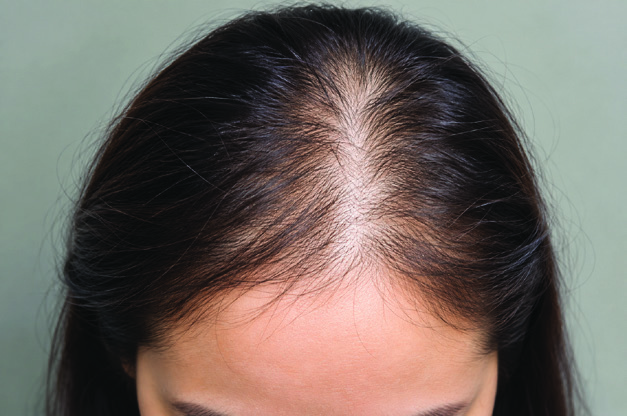
Have you noticed increased hair shedding, thinning hair, or a widening part during perimenopause or menopause? You are not alone.
Hair thinning is one of the most common concerns women experience during midlife. While declining oestrogen levels can contribute to changes in the hair growth cycle, hormones are often only one part of the picture.
Hair loss may be caused by several underlying factors, including:

Iron deficiency or low ferritin levels

Thyroid disorders

Vitamin and nutritional deficiencies

Chronic stress

Hormonal changes

Certain medications

Genetics and female pattern hair loss
Gradual thinning at the crown or widening part due to hair follicle miniaturisation over time
Sudden Hair Shedding Isn’t Always Female Pattern Hair Loss
Some women experience telogen effluvium—a temporary condition that causes widespread hair shedding across the scalp. This often becomes noticeable two to three months after a triggering event and may be caused by:
The good news is that telogen effluvium is often reversible once the underlying cause is identified and treated.
Could Low Iron or Your Thyroid Be the Cause?
Iron deficiency is one of the most commonly overlooked causes of hair loss in women. Even if your haemoglobin level is normal, low iron stores (ferritin) may still affect healthy hair growth. Women with a history of heavy menstrual bleeding, restrictive diets, or gastrointestinal conditions may be at greater risk.
Thyroid disorders can also affect the hair growth cycle and may be accompanied by symptoms such as fatigue, brain fog, weight changes, digestive issues, palpitations, or sensitivity to heat or cold.
Note: Early evaluation can identify treatable causes and help preserve healthy hair. If hair loss is accompanied by bald patches, rapid progression, scalp pain, persistent itching, redness, scaling, or scarring, prompt medical assessment is especially important.
A Medical Assessment Can Make a Difference
Don’t assume hair loss is just menopause. Depending on your symptoms, your doctor may recommend tests such as:

Iron studies (including ferritin)

Complete blood count (CBC)

Thyroid function tests (TSH)

Vitamin D levels

Comprehensive metabolic panel

Hormone testing, where appropriate
Consult Our Specialists at Raffles Medical


Understanding the cause is the first step towards effective treatment.