

Introducing Food Intolerance Test
The key to unlocking the mystery behind your digestive issues!
While food allergies and intolerance can look alike, how do you tell the two apart?
Food allergy
Involves an immune system response soon after eating a particular food. Even a tiny amount of allergy-causing food can trigger signs and symptoms such as digestive problems, hives, or swollen airways.
A food allergy can cause severe symptoms and even life-threatening reactions (anaphylaxis) in some people.
Food intolerance
Is a less severe condition involving a reaction from the digestive system (usually 2 to 72 hrs after ingesting the offending food), not being able to properly digest (or break down) certain foods or substance(s) ingredient(s) in particular foods, often because of enzyme deficiency. Food intolerance or food sensitivity is commonly caused by a “leaky gut” or impermeability.
Potential symptoms include lethargy, headaches and trouble concentrating, joint pain, frequent gas, bloating, indigestion, skin issues, depression or anxiety, and increased susceptibility to catching colds and viruses.
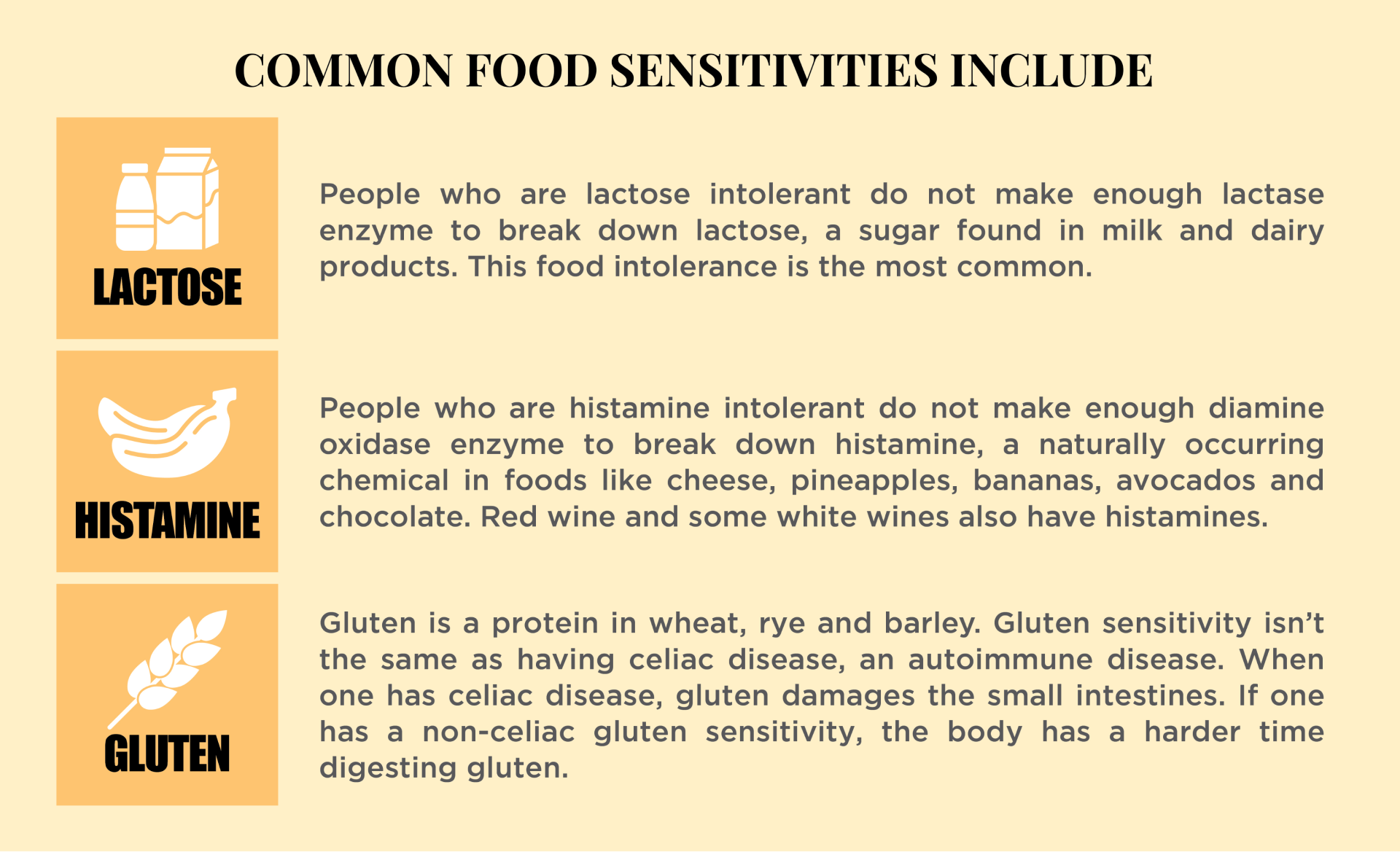
COMMON FOOD SENSITIVITIES INCLUDE



Why food intolerance test?
Food intolerances tend to be lifelong. Most people can manage symptoms if they reduce or cut out foods that cause digestive problems. Food intolerance may be an inconvenience (and the symptoms unpleasant). When food particles enter the bloodstream, your immune system can sometimes identify these food proteins as ‘foreign’ and produces IgG antibodies to ‘attack’ the particular food in question. This response is the immune system’s natural defence mechanism to ward off harmful invaders in the body, which can create inflammation. This inflammation can trigger troublesome symptoms, which may persist if neglected.
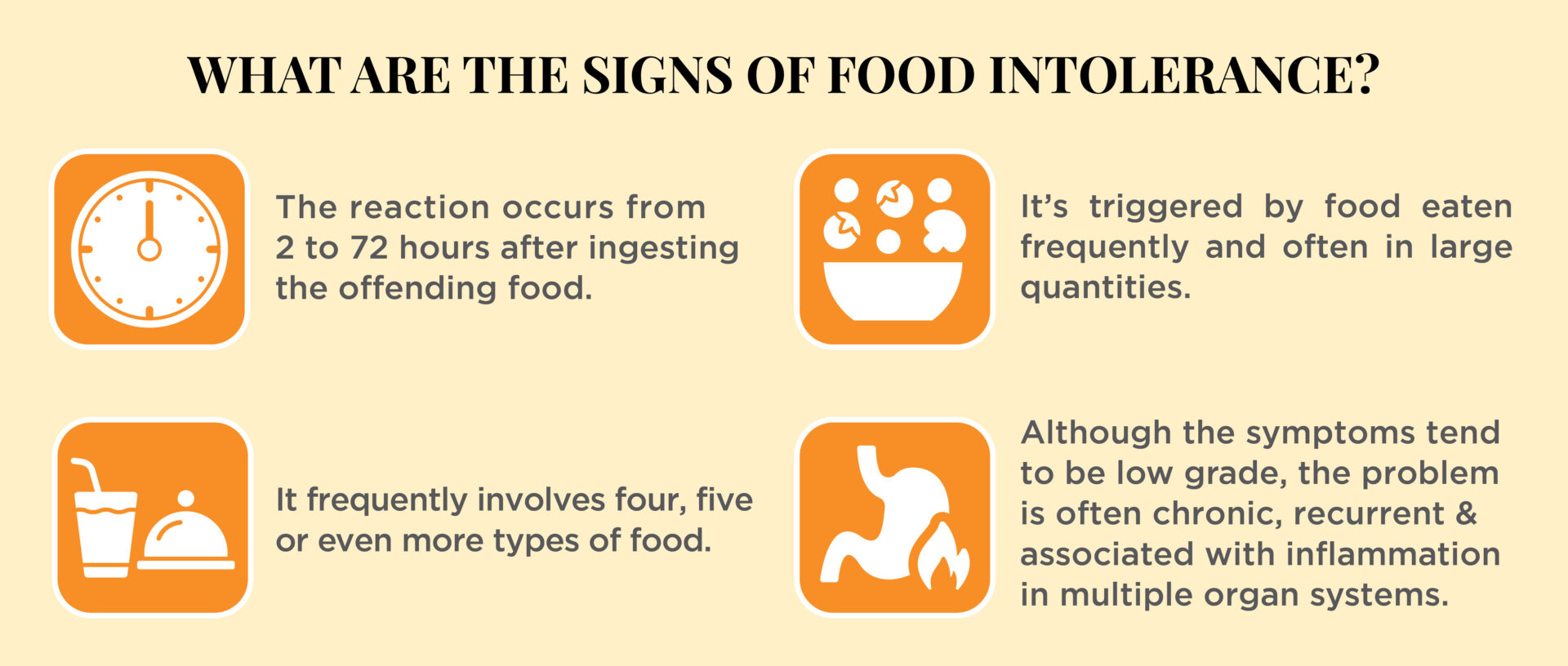
WHAT ARE THE SIGNS OF FOOD INTOLERANCE?




When should I call the doctor?
You should call your healthcare provider if you experience extreme abdominal pain or diarrhea, severe reaction to food, and/or unexplained weight loss.
If you are experiencing the symptoms above, come see us for a possible food intolerance test.
At Raffles Medical, our experienced doctors are dedicated to provide comprehensive and quality healthcare services for the whole family. From health screening to health management for chronic diseases — we provide holistic general practice healthcare.
Call our clinic or make an appointment online to see our specialist.
Meet our specialists

Dr. Ong Kian Soon
Internist